
China’s Physical AI Moment: Why Purpose-Built Automation Will Scale First
Purpose-built Physical AI will reach commercial scale before general-purpose robotics. The first large markets will reward machines that do defined work, produce measurable returns in controlled environments, and arrive with an operating model that keeps them productive.
By Daniel Stern, Director of Strategic Research & Partnerships, and Drew Hallman, Investment Director, güil.
We believe in a distance-free world, one where access to people, goods, services, and opportunity is less constrained by geography. Reaching it will require more than better vehicles. It will require machines that can move, work, and operate reliably in the physical world.
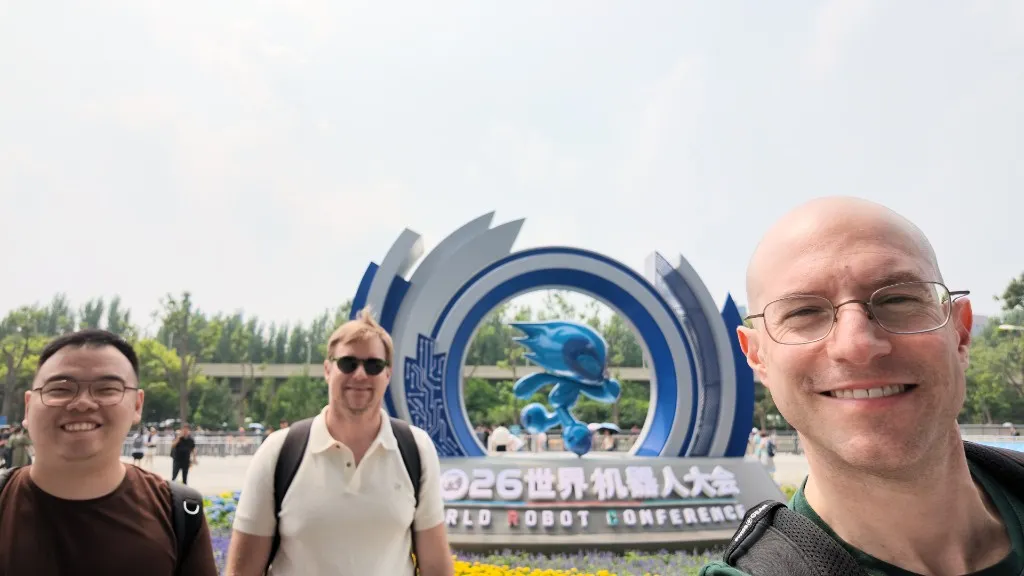
From 12 to 22 August 2026, our team travelled through Shanghai and Beijing to test two of the nine futures güil tracks: Physical AI and autonomous vehicle services. We kept returning to one practical question. How far have these technologies moved from technical promise to commercial deployment?
The most advanced robot is not always the most deployable robot.
00 · On the floor
Four observations survived the trip
Kiosks, dark stores, carton handling, airport tractors, and yard trucks have bounded tasks and measurable cycle times.
Fleet orchestration, remote support, service contracts, charging, battery swap, and financing determine uptime.
Its installed base and annual deployments matter more than a single density ranking.
Hardware and models are improving quickly. Reliable integration across thousands of shifts remains scarce.
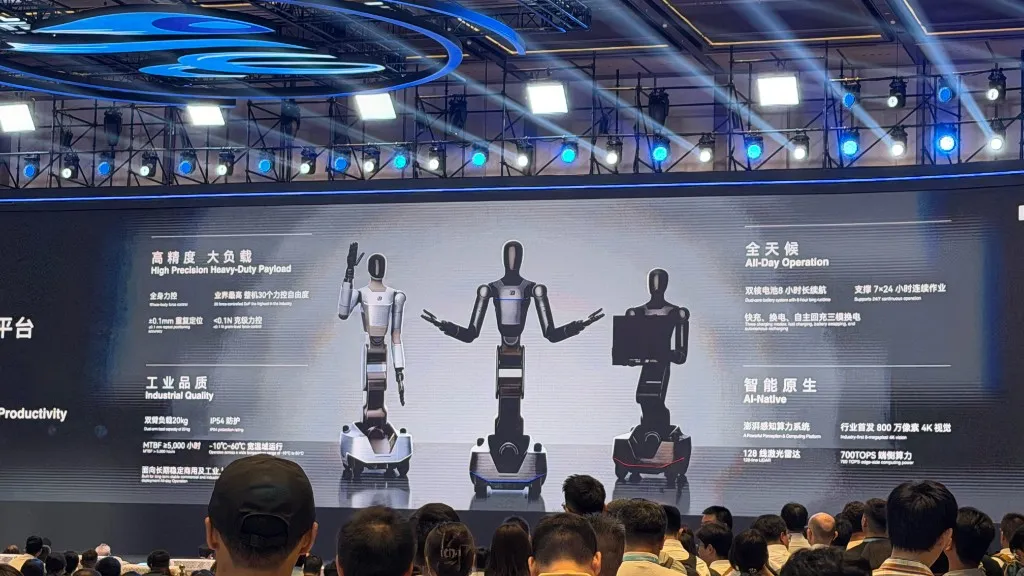
The dancing humanoids drew the largest crowds in Beijing. The quieter machines told us more: a robot folding cartons, a dark-store system assembling an order, and autonomous tractors moving loads inside sites with clear operating rules. Those workflows expose failures quickly. They also make ROI legible.
01 · China at scale
The density number changed. The market signal did not.
China installed 295,045 industrial robots in 2024, equal to 54% of worldwide installations, and reached an operating stock of 2.027 million units, according to the International Federation of Robotics. This is a production market with suppliers, integrators, customers, and operating experience at unusual scale.
One widely repeated number needed correction. Updated Chinese labour data changed the manufacturing employment denominator, and the IFR restated China’s robot density at 166 robots per 10,000 manufacturing workers. The earlier figure of 470 should no longer be used. The United States stood at 307 under the same measure.
The restatement is a useful warning for investors. Comparative metrics can move when their denominator changes. Installed units, domestic supplier depth, and the number of systems surviving daily use give a firmer read on industrial capability.

02 · Shanghai
Bounded autonomy is already an operating business
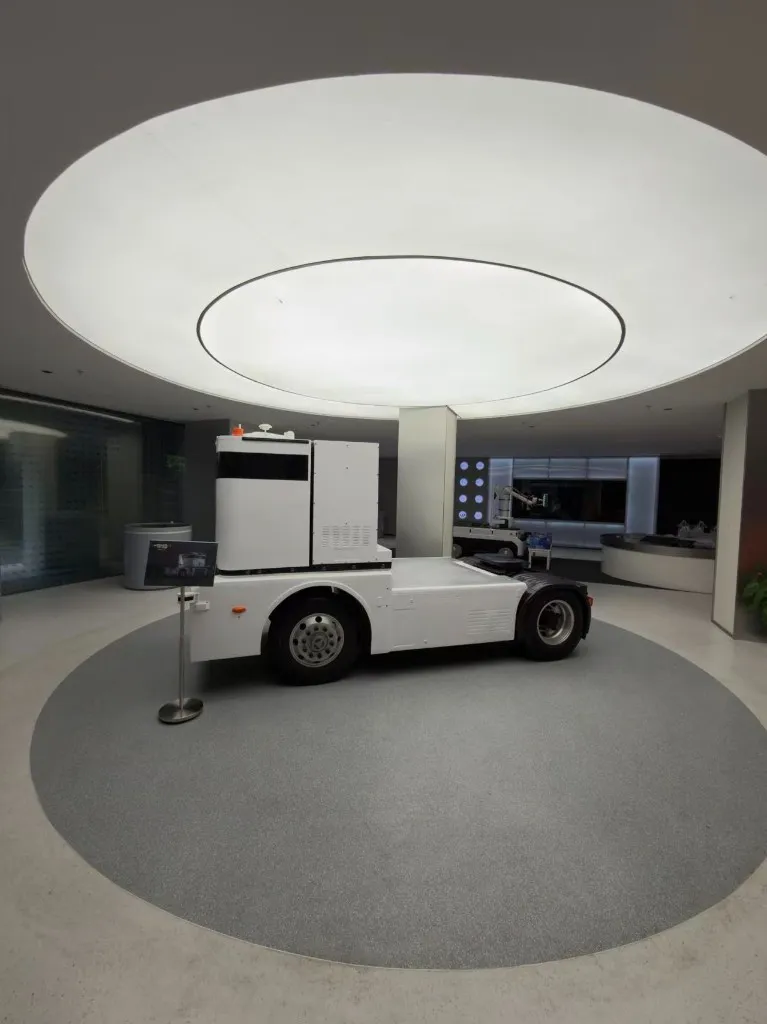
Westwell and UISEE approached autonomy from different environments, but their commercial logic was similar. The AV vehicle is the visible asset. AV Fleet operations create the value.
Cabless electric trucks for ports and logistics sites. The Q-Truck carries up to 75 tonnes. In July 2026, the Port of Felixstowe completed its planned order for a 100-unit fleet, supported by automated battery swapping in roughly five to six minutes.
Level 4 autonomous vehicles for airports and other enclosed sites. UISEE listed in Hong Kong on 20 May 2026. Its reported Hong Kong International Airport fleet exceeds 70 vehicles and has accumulated more than four million kilometres over 1,500 days of routine operation.
Both examples deserve normal diligence. Several operating figures come from the companies or listing materials. Yet the qualitative evidence is difficult to dismiss: these are multi-vehicle deployments inside live commercial operations, with mixed traffic, uptime requirements, charging constraints, and customers who can stop renewing.
Our read is that bounded autonomy has crossed an important threshold. The product can now be underwritten as an operation: throughput, availability, intervention rate, energy use, and labour substitution. Those answers live in fleet logs.
03 · Beijing
A small minority of robots were doing useful work
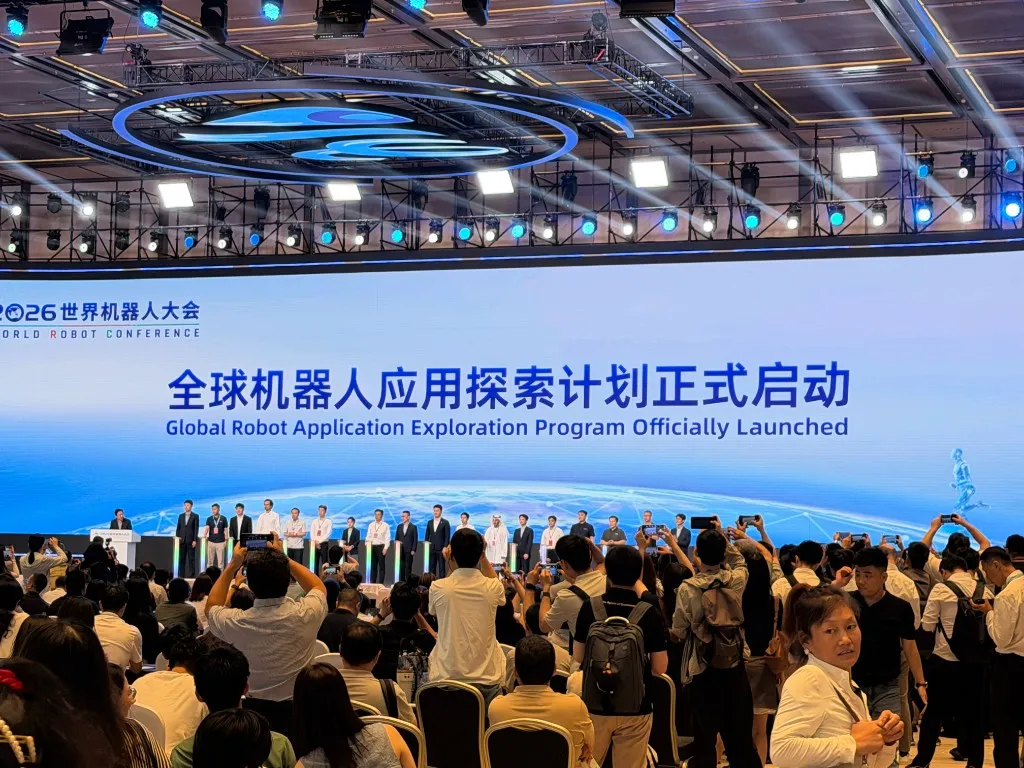
The World Robot Conference ran from 19 to 23 August at the Beiren Etrong International Exhibition and Convention Center in Beijing E-Town. More than 300 companies and 2,000 exhibits were expected. The floor gave us plenty of technical ambition and a less comfortable ratio: most robots were still performing for an audience. A small minority were completing work.
The useful footage was quieter than the spectacle.
Galaxea dark store. A humanoid picked and packed an order inside a closed aisle. Defined SKUs, defined paths, measurable cycle time.
Robot kiosk. A customer submitted a QR order at a service window. Commercial value depended on a reliable handoff, payment flow, replenishment, and recovery when the robot missed.
Cartons and sorting. Robots folded cartons, removed goods from conveyors, and preserved barcode orientation. These tasks sound narrow because they are narrow. That is exactly why a plant manager can measure them.
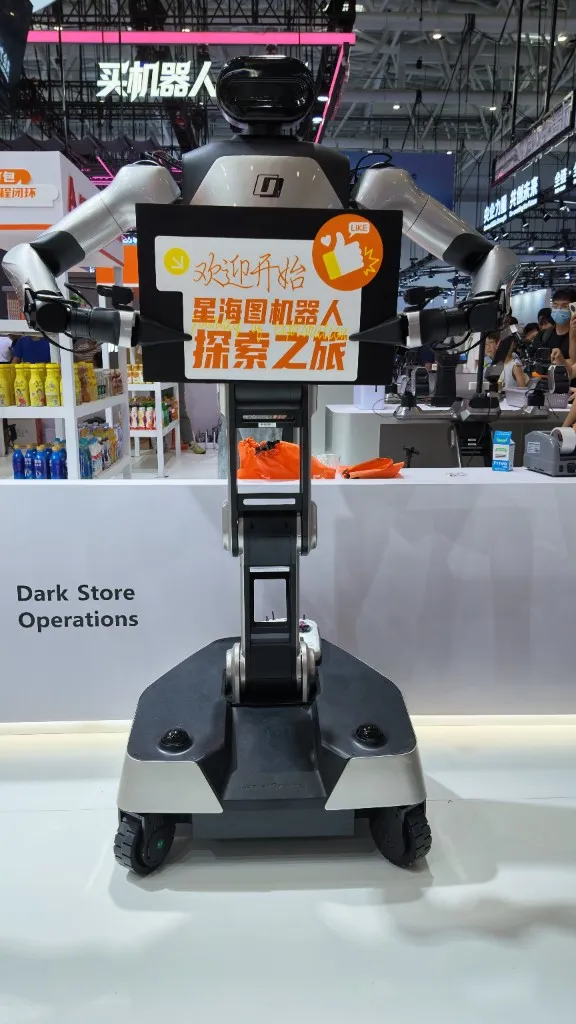
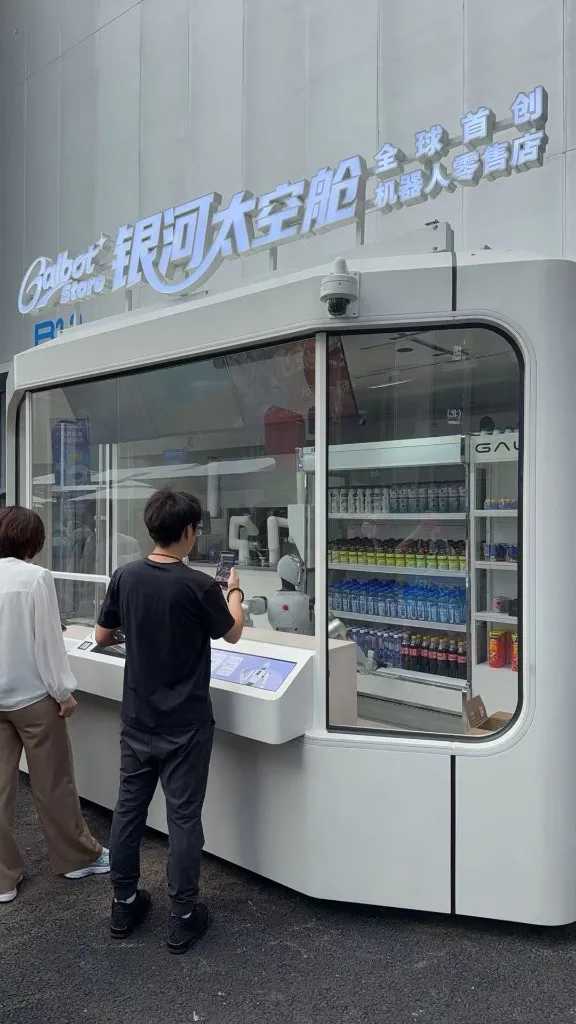
Humanoids still matter. Their form factor is compelling wherever workspaces, tools, and processes were built for people. Foundation models may eventually let one machine handle many tasks with less retraining. We are still unsure how quickly reliability, safety, maintenance, and cost will converge outside carefully staged settings.
The near-term commercial wave has a simpler requirement: stable continuous operation on one valuable workflow.
04 · The operator stack
Keeping the robot productive on a Tuesday
Early-stage robotics capital tends to cluster around models, actuators, sensors, and novel hardware. Those layers matter. The thinner layer is the operational system that turns a machine into dependable capacity.
Deploy. Site survey, workflow design, integration, safety case, and first-shift supervision.
Orchestrate. Fleet software, task allocation, exception handling, and human-in-the-loop controls.
Service. Uptime commitments, spare parts, remote diagnostics, and technicians who can restore the system.
Finance. Robot-as-a-service, asset ownership, residual value, insurance, and working capital.
Learn. Operational data that lowers interventions and makes the next deployment cheaper.
This stack is less visible than the robot. It is also where local knowledge compounds. Every site has different layouts, labour practices, safety rules, systems of record, and maintenance expectations. Deployment partners that can standardize those differences without pretending they do not exist may capture more durable value than another undifferentiated machine vendor.
Purpose-built systems have an advantage here. A narrow workflow limits the number of exceptions, makes the service model easier to price, and gives the customer a baseline for payback. Generality expands the addressable market, but it also expands the operating surface that can fail.
05 · The LATAM deployment test
Global hardware still needs a local operating model
Latin America does not need to copy China’s deployment path. The region has its own labour economics, financing constraints, infrastructure, safety requirements, and procurement cycles. The relevant lesson is that adoption accelerates when a technical system arrives with the operating model around it.
Ports, mines, distribution centres, airports, service yards, and private industrial roads offer credible starting points across Chile, Peru, Colombia, and Central America. They combine valuable assets with repetitive movement inside bounded environments. Many also operate multiple shifts, which gives uptime improvements and safety gains enough volume to matter.
güil can evaluate these systems through access to one of Latin America’s largest commercial vehicle networks. That access lets us test regional fit against a practical diligence question for founders: can the product survive local sites, local service expectations, and the economics of deployment outside its home market?
The partnership opportunity extends beyond sales. Regional integrators, fleet operators, distributors, financiers, and service networks can become part of the product. Robotics companies searching for growth in LATAM should design that operator stack before shipping the first unit.
06 · Questions we kept getting
FAQ
Are humanoids irrelevant to the first commercial wave?
No. Their value rises in environments designed around the human body, especially when tasks change frequently. Our current view is narrower: defined, high-value workflows offer the clearest route to dependable revenue today.
Is China ahead?
China has unusual depth in deployed industrial hardware, manufacturing capacity, and application density. Leadership varies by layer. Western companies remain strong in frontier models, software, and several autonomy stacks. Full-stack deployability is the useful comparison.
What scales first
The first large Physical AI businesses will probably look less general than the long-term vision. They will solve one expensive workflow, in one legible environment, with an operator stack that can be repeated across sites.
This sequence is how new industrial systems earn the right to expand. Ports, airports, factories, warehouses, mines, and private roads can provide the operating evidence. The companies that learn fastest from those deployments will be better positioned when more general robots are finally ready for a full shift.
For güil, the investment question is becoming clearer: which teams can combine capable machines with deployment discipline, local partnerships, and an operating model that survives outside the demo?
Sources
- International Federation of Robotics: China reaches 2 million factory robots
- International Federation of Robotics: updated robot density figures
- Port of Felixstowe expands its Westwell autonomous truck fleet to 100 units
- World Cargo News: Felixstowe completes its 100-strong autonomous truck order
- Hong Kong Stock Exchange: UISEE listing allotment results
- Gasgoo: UISEE deployment and listing overview
- Beijing government: World Robot Conference 2026 dates and program